

Most custom homes begin, at least in the client's mind, as a floor plan. One might imagine a kitchen that opens to the garden, a primary suite tucked away at the far end of the house. But here in Santa Barbara, where lots climb into the foothills and run right up to the bluffs, we focus our attention on the land first. After more than 40 years of building here, we've learned that the most important conversations about a house tend to start with the ground beneath it. That’s why we pride ourselves on a proactive planning approach for all our builds, consulting with our trusted architects, land planners, and engineers (many of whom we’ve worked with for decades) to deliver quality projects with confidence.
Consider the Slopes, Soils, and Drainage

At Yankee Farm, graded terraces and deep planted beds help to manage the slope and slow rainwater as it moves across the site.
A hillside lot can look like the perfect place to build, especially when it comes with ocean views and plenty of natural light. What you can't see from the street is what makes these properties complicated. Depending on the slope, the house may need stepped foundations, retaining walls, or caissons drilled down to bedrock. Soil conditions matter just as much. Some soils expand when they're wet and shrink as they dry out, which can affect how a foundation needs to be designed. That's why soil testing and a geotechnical report matter so much early on. They show what's possible on a property and what needs to be accounted for before construction begins.
Drainage is another big consideration: rainwater has to go somewhere, and on a sloped lot, managing where it flows is especially important. The heavy storms we've seen in recent years are a good reminder of how much proper grading and drainage matter. If water isn't directed away from the house, it can lead to expensive problems that are difficult to fix down the road.
Trees and Sunlight Are Important Factors, Too

In the courtyard of the Downtown residence, an old olive tree grows up through the brick paving, with the house built around it.
Mature oak and sycamore trees are part of what makes so many Santa Barbara and Montecito properties special. Sometimes, a particular tree is one of the main reasons someone wants to build on a lot in the first place, but existing trees can also affect where the house can go.
Roots often extend well beyond the canopy, and digging too close can damage a tree or create construction challenges. Some trees are also protected, which can limit what you can do around them. Considering these factors early makes it much easier to fit the house into the property without major changes later.
Construction Access and Utilities Make All The Difference
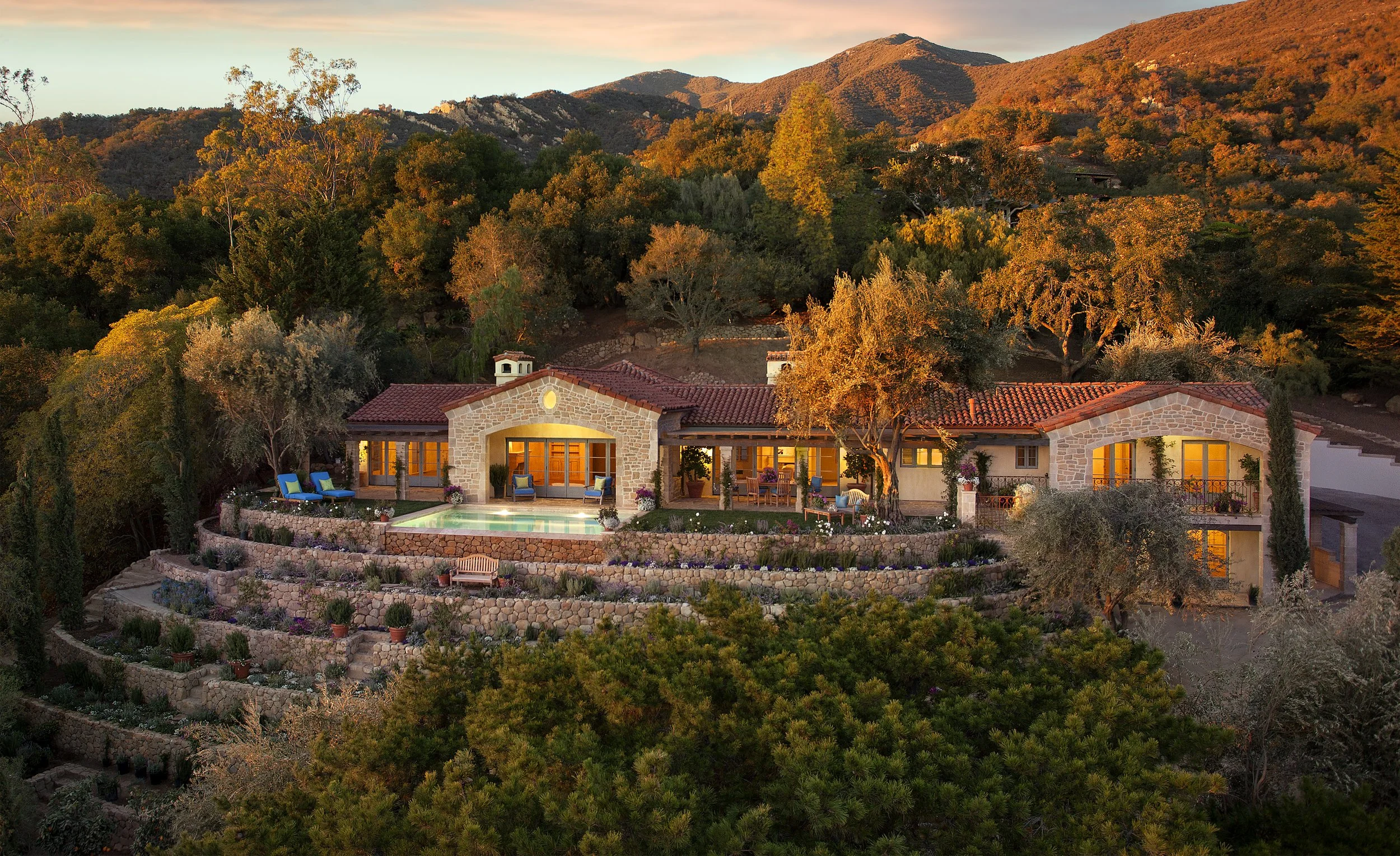
The Tuscan-inspired Brooktree rises above stepped stone terraces in the Montecito foothills.
On narrow roads in the foothills, getting equipment and materials to the property can take considerable planning. A steep or tight driveway may limit access for concrete trucks, cranes, and other large equipment. If neighboring homes are close by, the project may also require temporary shoring, vibration monitoring, or extra care to minimize disruption.
Utilities are another factor to consider early. For instance, connecting to an existing sewer line is usually more straightforward than installing a septic system, assuming one is permitted and suitable for the property. Bringing electrical service to a remote part of a lot can also add costs that aren't immediately obvious when you're first considering the project.
These are the kinds of details that can affect both the construction schedule and the budget long before the house starts taking shape.
Why Site Conditions Should Be Considered Early On
None of this is an argument against a beautiful plan; it's more of a case for letting the land help inform it. Surveys, soil testing, and early conversations with the architect and engineers during pre-construction tend to head off surprises, and what you end up with is a home that looks like it was always meant to be there. If you're considering a property, or already have one in mind, we invite you to talk with us early so the site can help shape the plan.